
PORCELAIN & DEKTON COUNTERTOP CUTTING
Porcelain and Dekton (sintered stone) are extremely hard and non-porous. They are durable in service but brittle in cutting — the failure mode is chipping at the blade entry and exit, and at sharp internal corners. Cutting them well is a process question, not only a machine question.
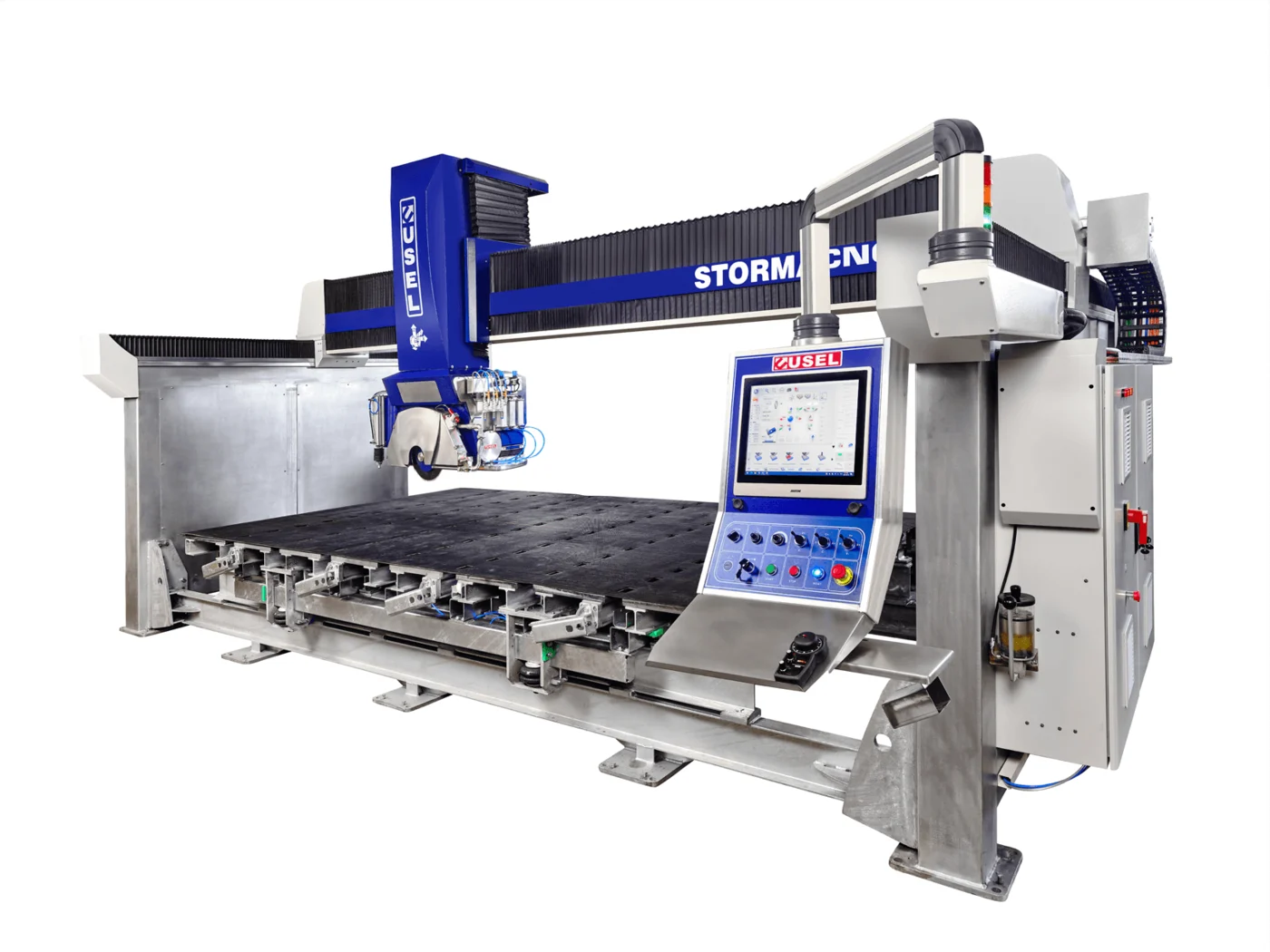
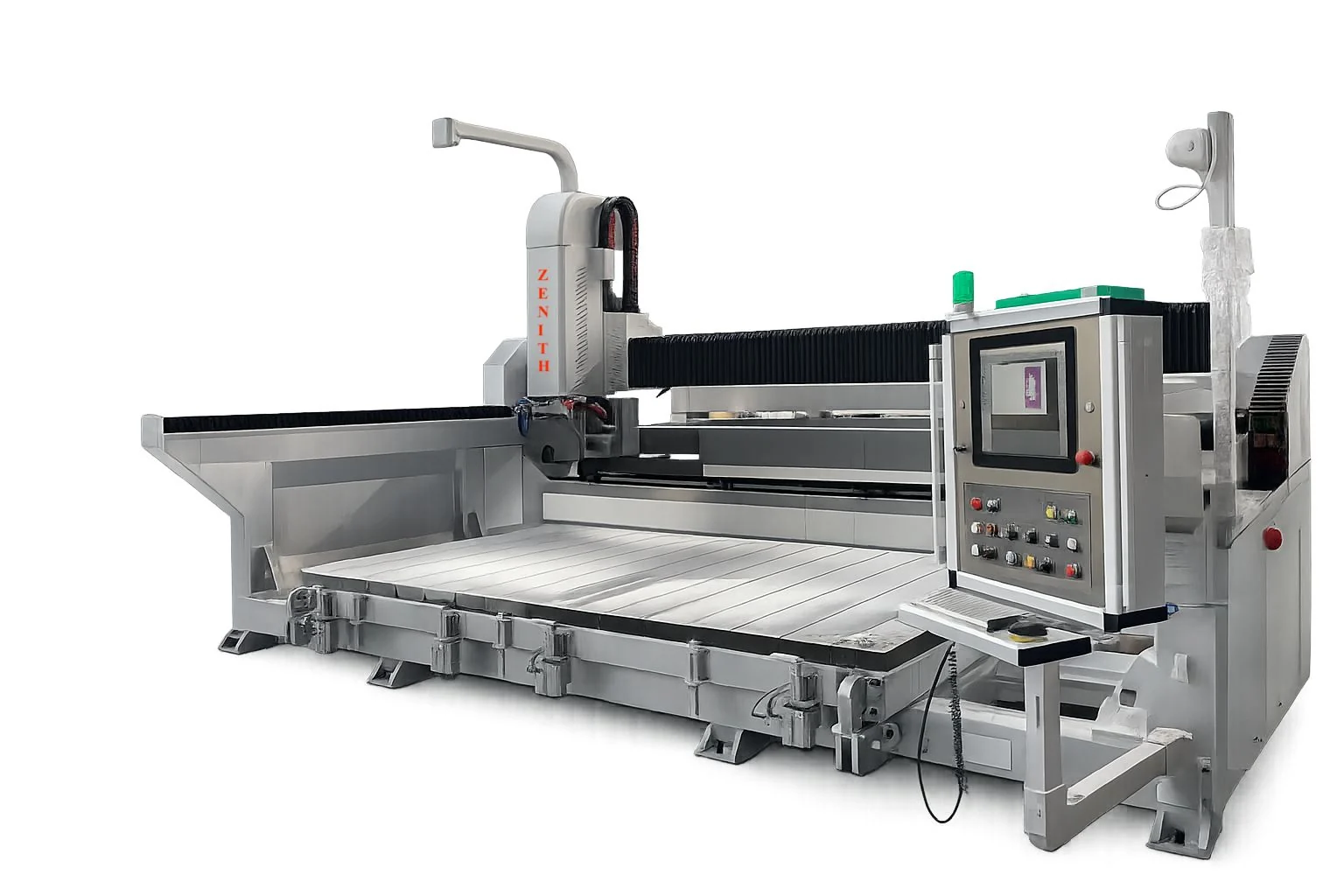
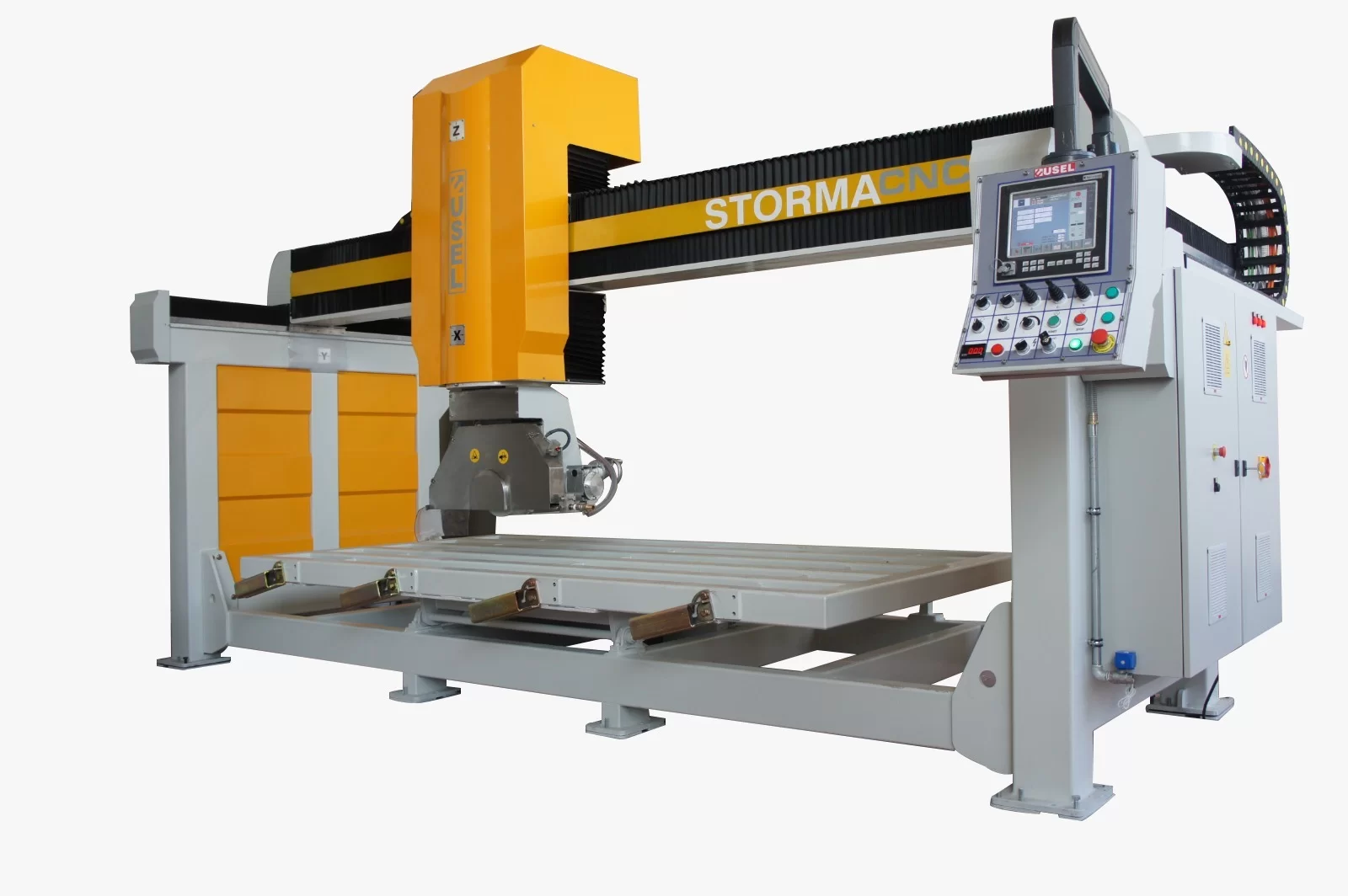
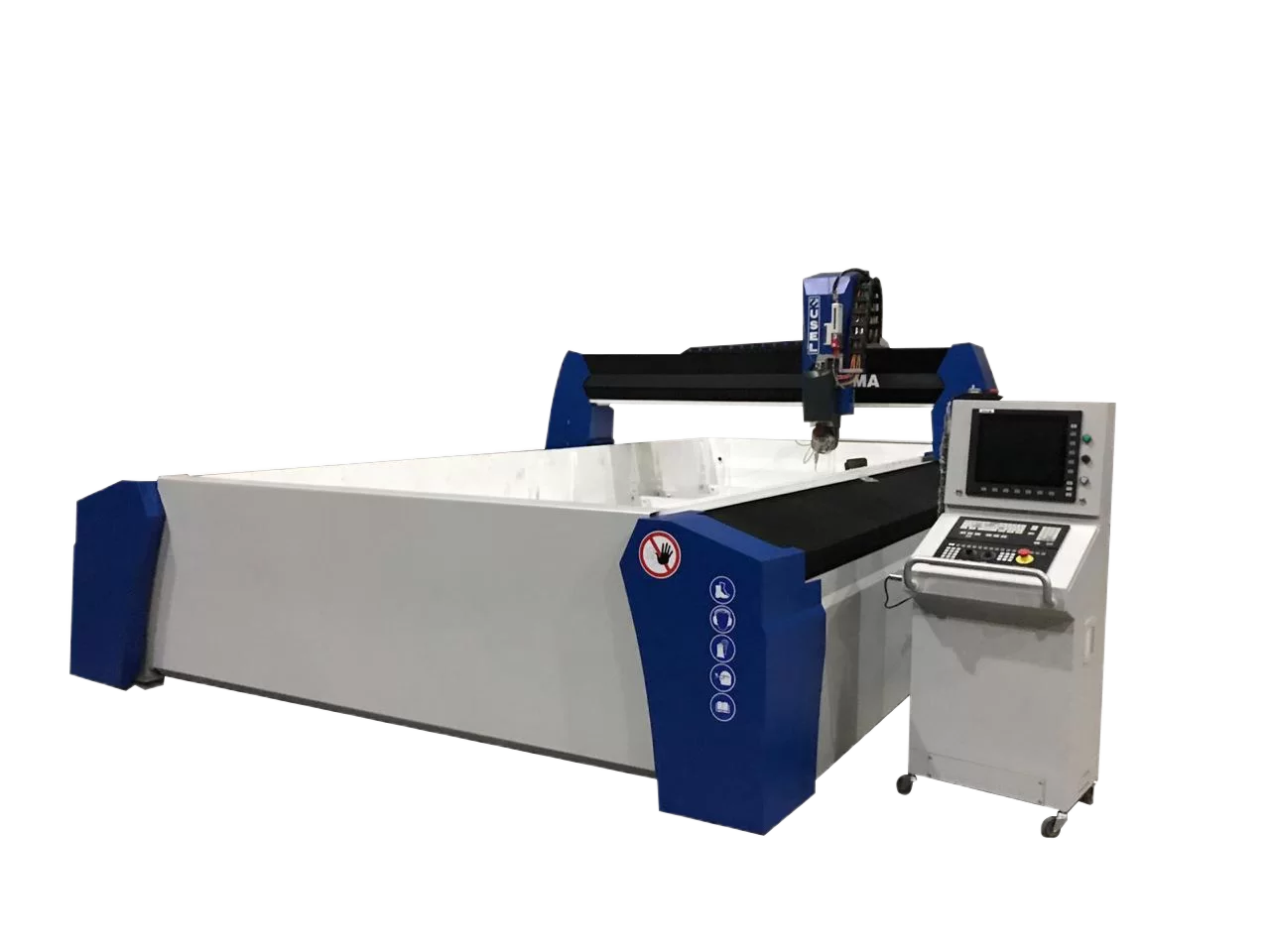
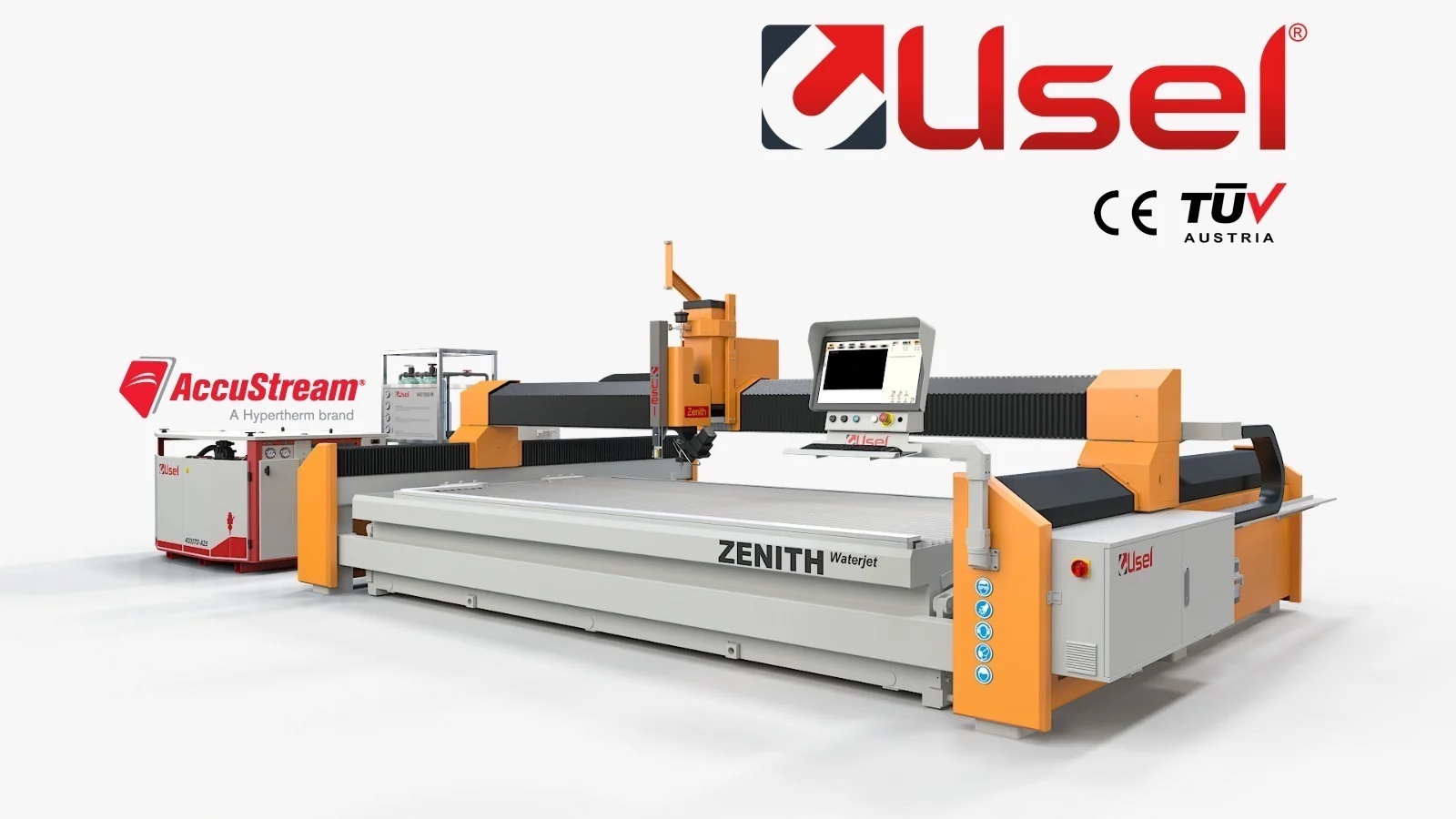
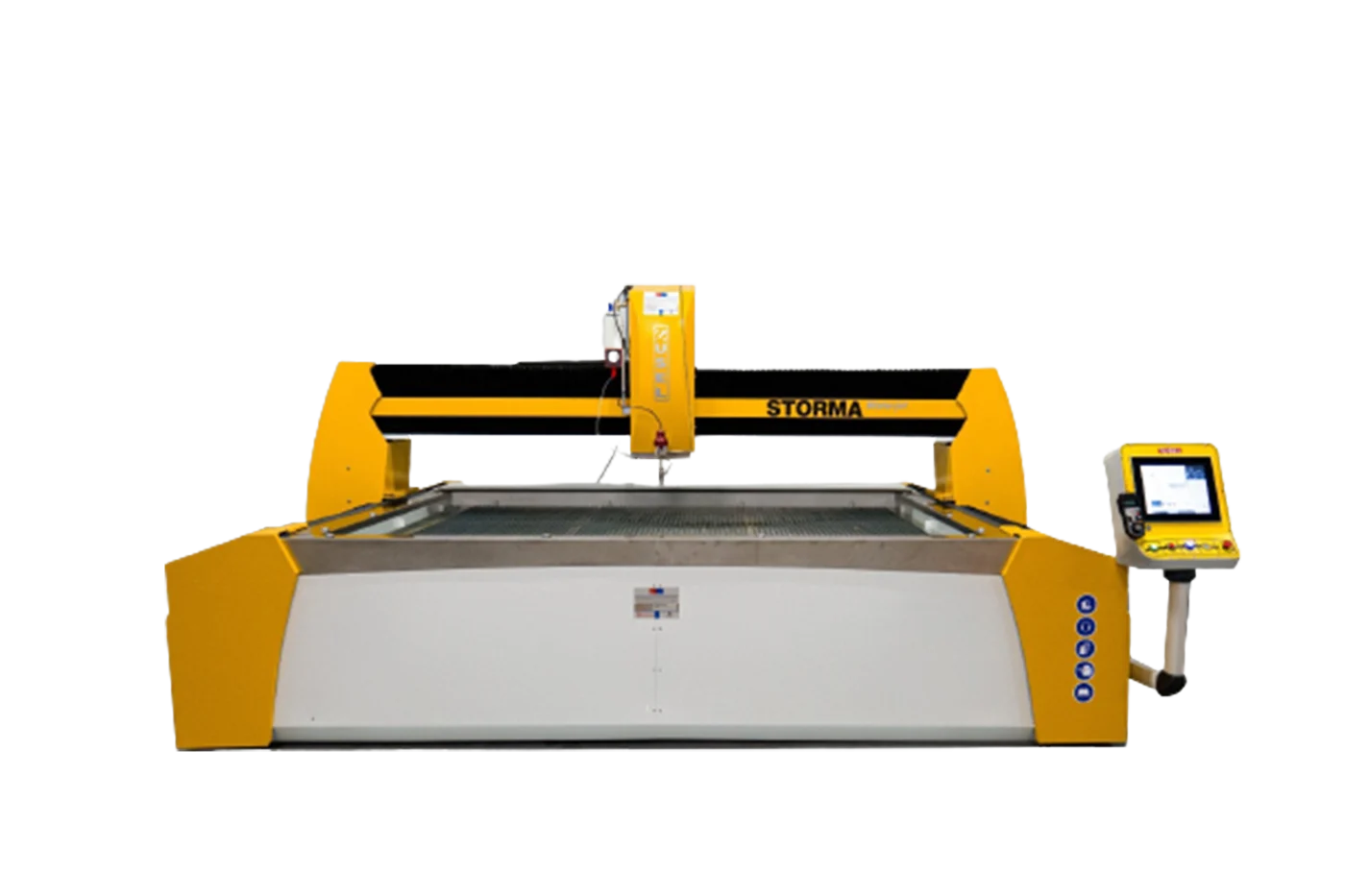
USEL supplies CE certified systems in both technologies: bridge saws in the STORMA (premium) and Zenith (value) series for sizing, mitring and shaping, and waterjets in the same two series for sink cut-outs, curves and detail work where heat and blade pressure must be avoided.
USEL PORCELAIN & DEKTON CUTTING MODELS
Getting sintered stone right
A bridge saw is fast and economical for sizing, mitring and shaping. A waterjet cuts internal openings, curves and detail without heat or blade pressure. Workshops producing sintered stone countertops in volume usually run both — they are complementary, not alternatives.
Sintered stone is hard but brittle; chipping occurs mainly where the blade enters and exits, and at sharp internal corners. The controllable factors are a porcelain-specific blade, reduced feed rate at entry and exit, correct water volume, and radiused internal corners rather than square ones.
This is where most material is lost. A waterjet makes the cut-out cold, with a radiused corner and no blade pressure on a thin remaining section — the single strongest argument for pairing a waterjet with a bridge saw in a countertop shop.
STORMA is the premium series with a heavier chassis and specification for intensive duty. Zenith does the same work at a more controlled investment. Both are available in bridge saw and waterjet.
PORCELAIN & COUNTERTOP KNOWLEDGE CENTRE
Guides on cutting sintered stone and producing countertops — method, tooling, chipping control and workholding.
Material & Cutting
Countertop Production
Frequently asked questions
What are porcelain and Dekton countertops cut with?
A diamond blade bridge saw for straight cuts and mitres; a cold-cutting waterjet for sink and hob openings and complex curved detail. Most countertop workshops use both.
For sintered stone, do I need a bridge saw or a waterjet?
They serve different purposes. A bridge saw is fast and economical for sizing, mitring and shaping. A waterjet produces internal openings, curves and detail without generating heat. For a countertop shop in volume, the two together are the practical answer.
Why does the edge chip when cutting porcelain?
Sintered stone is hard but brittle. Chipping happens mostly at the blade entry and exit points and at sharp internal corners. A porcelain-specific blade, reduced feed at entry and exit, correct water volume, and radiused internal corners all reduce it substantially.
What difference does STORMA versus Zenith make for porcelain?
STORMA is the premium series: heavier chassis and equipment specified for intensive duty. Zenith performs the same work at a more controlled investment. Both are CE certified and manufactured in the same factory.
How much does a porcelain countertop cutting machine cost?
Price depends on method (bridge saw or waterjet), series (STORMA or Zenith), axis count, cutting area and options. Tell us your material and volume and we will quote the right configuration.
LET'S
TALK.
Let’s find the right machine for your project together.